
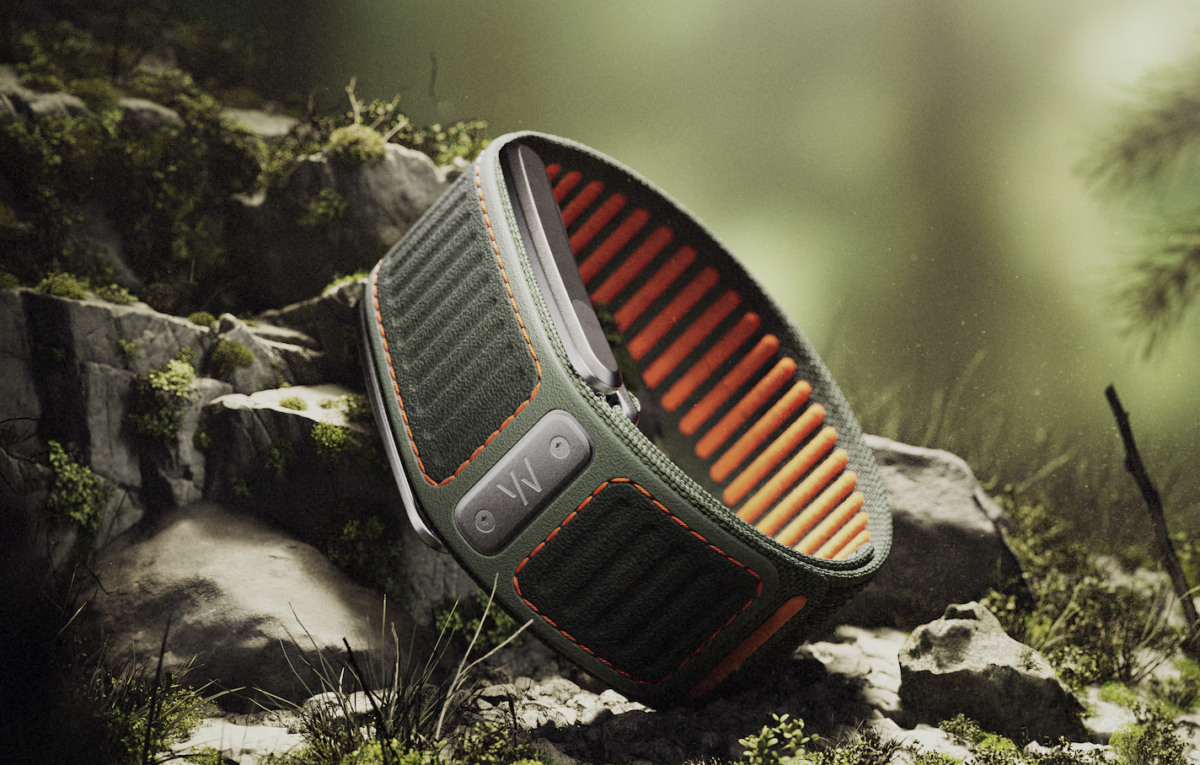
The category Whoop named “recovery trackers” when it launched its first screenless strap has outgrown that label. Devices grouped under it monitor sleep architecture, heart rate variability, resting heart rate, respiratory rate, skin temperature, and some devices monitor blood pressure trends and ECG. Recovery, the composite readiness score derived from these inputs, is one of many insights. A more accurate description would be a lifestyle band. It’s a 24/7 physiological monitor that is worn continuously, even while you sleep, creating a long-term health record rather than a workout log. These devices monitor, support and help you manage your lifestyle choices on your own terms.
What these devices monitor
Four broad categories cover what the lifestyle band tracks: activity, sleep, recovery, and an expanding set of medical-related parameters. Here’s what these devices track, or in some cases claim to track.
- sleep: Duration, staging (light, deep, REM), latency, interruptions
- Heart rate variability: Overnight rMSSD or SDNN, baseline trend, personalized range
- Resting heart rate: Nightly averages, long-term trends
- Breathing rate: Night measurements, useful signals of illness and overtraining
- Skin temperature: Deviation from baseline. Related to disease detection and menstrual cycle tracking.
- Blood oxygen (SpO2): Intermittent nightly or periodic monitoring, device dependent
- Stress response: It is not directly measured, but is inferred from the pattern of HRV decline and heart rate.
- Burden and training load: Cardiac strain across all devices. Whoop uniquely attempts to estimate muscle load using motion and workout pattern modeling.
- Readiness and recovery scores: Composite daily output from above inputs
- Blood pressure trends: Whoop MG, early stage, positioned as health monitoring rather than medical diagnosis
- electro-cardiogram: Whoop MG On Demand. Some devices provide regular heart rhythm monitoring to detect arrhythmias.
- Glucose synthesis: Available via the Ultrahuman ecosystem, but not yet native to wrist straps
What they don’t do:
- GPS tracking or navigation
- Detailed workout tracking without the need for paired devices or manual input
- Direct measurement of muscle tension
form factor triangle
Three form factors are now competing for the same customers. GPS watches capture rich workout data, integrate navigation, and connect to established sports ecosystems. Battery life varies considerably. Most Apple Watch models are charged every day, but Garmin’s multisport watches can last for several weeks. Additionally, GPS watches are cumbersome to wear while sleeping and are prohibited in contact sports. The smart ring produces highly stable HRV and sleep signals at night, wears discreetly on your finger, and lasts 5-15 days on a single charge. However, the accelerometer cannot cover all types of activity, and the optical sensor loses reliability when exercise intensity increases.
Wristbands occupy the middle ground. It is worn continuously like a ring, but is positioned to capture real exercise movements through accelerometers and intensity through heart rate, and can estimate both cardiorespiratory and muscular loads if the algorithms support it. Integrated GPS currently conflicts with the battery life and form factor priorities of screenless bands. This is also why GPS watches continue to be a more capable tool for serious multisport athletes. GPS watches provide visual feedback and real-time instructions that screenless straps cannot.
Role of HRV
Heart rate variability is the primary physiological input behind any readiness, recovery, and stress scores these devices generate. Our detailed HRV guide provides complete coverage of the science, methodology, and limitations, including independent accuracy data against the Polar H10 reference standard. Short version: Nocturnal rMSSD or SDNN is measured continuously or periodically during sleep and is a reliable signal of the state of the autonomic nervous system. It is not possible to differentiate the cause. Hard training, lack of sleep, illness, and psychological stress all suppress HRV in ways that are indistinguishable at the sensor level. Most consumer stress scores are inferred from autonomic signals rather than direct measures of psychological stress, and readiness scores are composite outputs rather than validated clinical measurements.
Yet another limitation applies specifically to HRV at night. This is not an exercise physiological readiness state in a direct sense, but rather reflects how resting physiology copes with accumulated demands. HRV practitioners, including Marco Altini, who is the basis of the HRV4Training methodology, prefer to take seated alertness measurements before the day’s activities to assess immediate readiness for training.
Categories in 2026
Whoop created this category and its implementation remains the most complete of wrist straps. Its closest competitors are the Polar Loop, Amazfit Helio Strap, the $99 Fitbit Air, the first reliable screenless tracker below Whoop’s hardware costs, and the Biostrap EVO, a niche option with a strong algorithmic foundation. Garmin filed for the CIRQA trademark in February 2026, strongly hinting at the development of a dedicated recovery wearable, but no release date has been officially confirmed. In the smart ring segment, Oura and Ultrahuman are the two strongest choices. The latter offers a comparable feature set without a subscription.
This category has generated significant legal activity. Whoop goes after hardware copycats, filed trade dress claims against Polar, and recently targeted lookalike apps. Oura filed patent lawsuits against Amazfit, Reebok, and Noise. Both companies defend their long-established positions of developing proprietary algorithms and building novel hardware that new entrants have consistently undervalued.
Data, AI and broader health initiatives
These devices are also data assets. Fitbit Air costs $99, has no required subscriptions, and appears to be designed as a population-scale health data collection platform. At that price point, hardware margins are thin, and the value lies in the long-term dataset that the Google Health platform accumulates. Whoop, which raised $575 million at a $10.1 billion valuation in March 2026 and has more than 2.5 million members, is building its AI coaching layer on a proprietary dataset of comparable size and says an IPO is the next step. Ultrahuman extends its data stack beyond the wrist to include blood sugar levels, blood panels, and home environmental monitoring. The pattern is consistent. Sensors capture the signal, platforms interpret it, and the dataset becomes a permanent competitive asset. For users, the choice of a device is also a choice of which health data infrastructure to contribute to.
The most important near-term development in this direction is the integration of blood panels. With Whoop and Ultrahuman, users can correlate blood biomarkers with long-term wearable data to generate a combined picture of how ferritin levels track against training loads, or how hormonal trends relate to recovery scores. The reports it generates are more detailed and contextual than standard clinical result printouts, and the ability to target specific behaviors against identified biomarker shortcomings is a meaningful step toward truly personalized health management. Regulatory clearance and sensor validation both remain significant barriers to widespread medical use of these devices.
sensor horizon
The wrist is a poor place to place an optical heart rate sensor during exercise that involves vigorous arm movements. Motion artifacts degrade the signal at the points where accuracy is most important. There is no optical engineering solution for this on the wrist. Location is a constraint. The real solution is to move the sensor. Most bands can be worn on your biceps using a third-party sleeve, greatly increasing the precision of your resistance and interval training. Whoop tackles this problem more comprehensively than any of our competitors. The Any-Wear apparel range, which covers bicep sleeves, sports bras, shorts, tops and leggings, is equipped with sensor pockets designed to meet the specific demands of different sports, with devices automatically detecting and recording where it is worn. See the Whoop Accuracy Guide to see the practical difference this makes.
A deeper question regarding this category of sensors is muscle oxygen. SmO2 is measured by near-infrared spectroscopy placed directly on the target muscle, tracking oxygen supply and demand within that muscle along with total hemoglobin as a proxy for blood flow. These metrics reveal what heart rate can’t: whether your muscles are being adequately supplied during intervals, how fully your muscles are recovering between sets, and where your physiological ceiling for a given effort actually lies. For strength athletes, it is applied to fatigue monitoring and rest time management. For endurance athletes, applications extend to warm-up optimization, threshold testing, and interval pacing. An established consumer device was the Humon Hex, now defunct as Whoop acquired the team and assets in 2020, and now the Train.Red FYER and Moxy Monitor. Whoop’s April 2026 NIRS patent describes a pressure-sensitive wearable that can be worn on the thigh, arm, or chest. Garmin filed a trademark for Muscle Battery around the same time. Neither product has been announced yet. If Whoop were to ship SmO2 as a peripheral, the same accessory architecture could also support a unique chest strap for sports, solving wrist accuracy issues at the hardware level rather than the apparel. The next generation of Whoop with SmO2 integration is expected to arrive by 2027.
How to choose
Competitive athletes who train twice a day and need muscle load data along with cardio tension now have one important choice among wrist straps: the wrist strap. That’s Whoop. For everyone else, the choice impacts ecosystem, subscription tolerance, and form factor. Fitbit Air is the most accessible entry point for those familiar with the Google Health platform. Polar Loop is suitable for athletes within the Polar ecosystem who want a subscription-free option with solid physiological algorithms. The Amazfit Helio strap offers the best value for those willing to embrace a less mature platform. Oura leads sleep tracking and research synthesis. Ultrahuman matches based on core metrics without a subscription. While there are good reasons for Garmin users to wait for CIRQA, there is a learning curve for those new to the Garmin ecosystem.
These devices aren’t just for competitive athletes. The trajectory of medical monitoring, covering blood pressure trends, ECG, blood panel integration, and ultimately continuous blood glucose and heart monitoring, will be of interest to anyone with a serious interest in long-term health data.
reviews and coverage
review
Market and category analysis
Legal affairs and intellectual property
technical guide
#Recovery #Trackers #Lifestyle #Bands #Complete #Guide