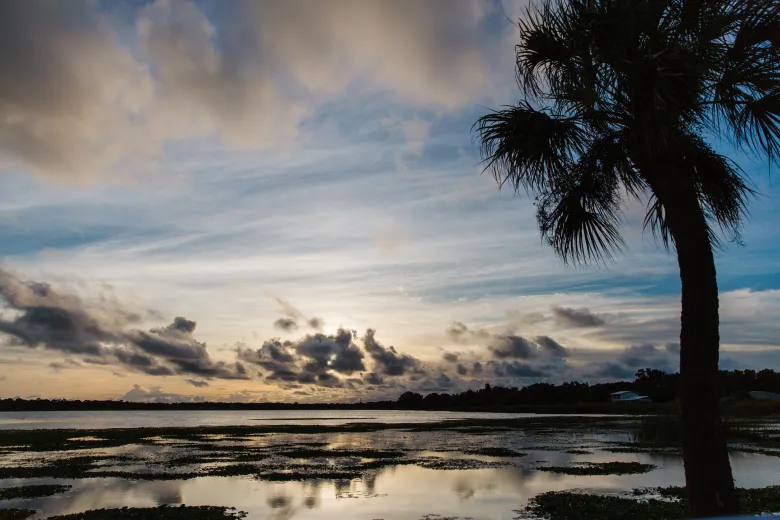
Salt Creek flows quietly through St. Petersburg’s Old Southeast neighborhood, past Bartlett Park, under a canopy of oak trees, and connects to Lake Maggiore at its southern end. To someone driving by the neighborhood, it may look like a drainage ditch, but it’s much more than that.
“Salt Creek and Booker Creek are natural streams. They are not ditches or dredged canals. They are natural hydrological features of our region,” Kira Barrera, an environmental scientist, municipal water resource manager and Sierra Club leader, told Creative Loafing Tampa Bay.
Creeks are essential to Florida’s ecosystem. They serve as natural nurseries for species such as tarpon and snook, a conduit for freshwater that balances Tampa Bay’s salinity, and help connect inland and coastal ecosystems.
“Changes in rainfall patterns, harbor temperatures, and sea level rise will all have profound impacts on these creek ecosystems,” added Maya Burke, tidal creek scientist with the Tampa Bay Estuary Program.
While we face pressures on creek sheds from development and climate change, we are losing our ability to protect water for invisible reasons. We are largely stuck measuring water health.
“The majority of streams are still understudied or not studied at all. This represents a list of opportunities for additional data collection, but there are no active plans or efforts for people to begin additional monitoring in these areas,” Burke noted.
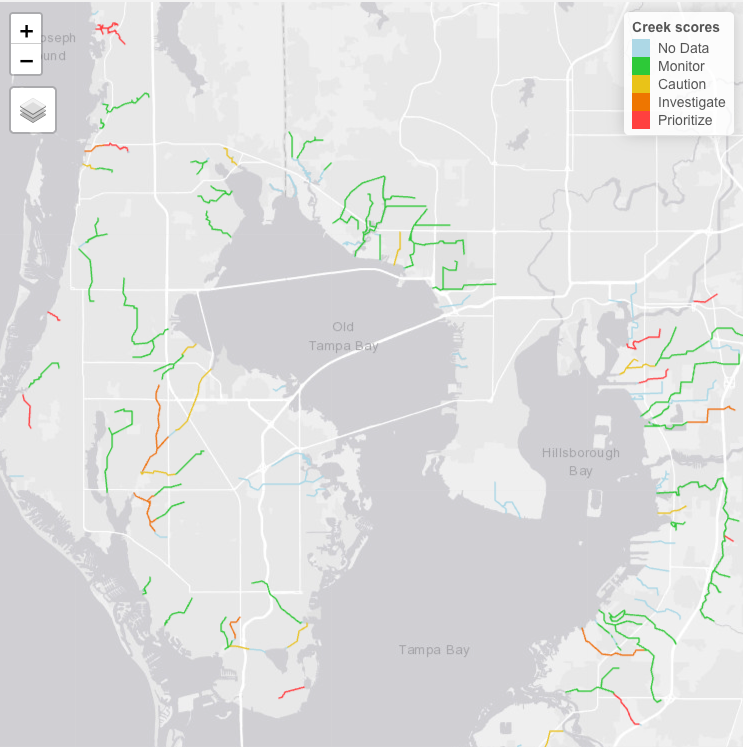
TBEP maintains a tidal creek dashboard that is updated every two years. Color-coded cliques let you see its status at a glance. Salt Creek is yellow to indicate a caution, Bayou Creek is a priority and is red. A cluster of large light blue lines representing cliques with no data.
Once a body of water is officially designated as impaired under Florida’s Impaired Water Regulations, local governments are legally obligated to take corrective action.
“If you’re waiting for impairment to be listed under the Impaired Water Regulations, you’ve waited longer than I would have liked,” Burke said. “When it comes to water quality, it’s always easier to prevent a problem than to try to fix it after it happens.”
Without consistent data, it is impossible to determine whether a water body is damaged or whether preventive and remedial measures are working. Once the data is collected, people can approach the problem.
At Salt Creek, volunteers and the city work together to collect data to preserve the creek and help drive the restoration process.
“I’m from St. Pete. I went to school at USF St. Pete, and those campuses were all adjacent to Booker Creek and Salt Creek. I could see them every day and work on and around them, and it seemed like a really special, under-loved, under-served body of water,” Barrera said.
Mr. Barrera was a civic leader in community efforts by the Sierra Club, Old Southeast Neighborhood Association and USF St. Petersburg to form Friends of Salt Creek. She was later hired by the city to help with restoration work.
“We flew in sewage detection dogs to walk the watershed,” she said.
The broader remediation work included testing all sorts of different things that could get into the city’s water.
“We tested for bird indicators, dog genetic markers, human DNA, and even traces of reclaimed water. We did dye testing studies, sewer testing, stormwater testing, and looked for interconnections or defects in pipes that could be leaking into the watershed,” Barrera added. “In the case of Salt Creek, we can now select projects in a more strategic way. It’s really great to have the data to make informed decisions about which types of remediation activities will have the greatest impact.”
However, government oversight has reached a plateau.
“Surveillance programs are costly, and the city goes above and beyond what is required of compliance monitoring through FDEP. But not every city, especially given everything that is going on in the state budget right now, can probably consider expanding the program,” Barrera said.
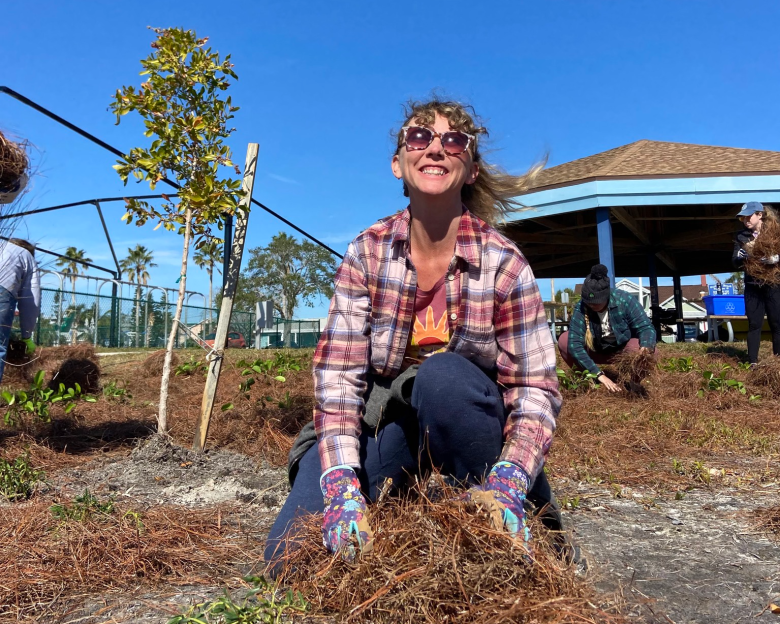
The most extensive data came from citizen initiatives. Government monitoring and community-driven monitoring often do not coordinate with each other because they test different parameters or use different locations on the water body. In the case of Salt Creek, community-driven monitoring considers four locations that are sampled monthly. The city is monitoring one person.
“Most local governments are maxed out in terms of oversight,” Burke said. “No company is looking to add ongoing regular water quality monitoring because they don’t have the staff time, staff capacity, or funding to process lab samples.”
Florida LakeWatch, a volunteer program affiliated with the University of Florida, has been effective in training residents and connecting them with university resources to conduct more testing. Expanding community-driven monitoring is uniquely positioned to address data gaps across the Creekshed.
Volunteer water quality data can identify trends and flag problems, which is valuable, but under Florida’s water pollution rules, it cannot by itself force regulatory action.
“If you live near a stream that’s painted blue and doesn’t have data, you can form a small neighborhood team and join this community science program to collect and contribute these data. But if you don’t have volunteers to do that, or if you don’t have someone actively coordinating that program, you’re just going to continue to have data gaps,” Burke said.
There is usually no silver bullet for environmental restoration.
Kira Barrera
“Management is a commitment, an ongoing process, and takes time. There is usually no silver bullet for environmental restoration,” Barrera said.
Florida Lakewatch provides training to help communities begin tracking water quality in their area.
Remediation often looks like tracking down and repairing leaking pipes, taking sediment samples, or pulling invasive plants from riverbeds.
“We’re not done with Salt Creek. I think we’re really just getting started, but I think this is an early success story that can be used as a bit of a framework for other watersheds and creek watersheds,” Barrera said.
Help make the Tampa Bay Journalism Project a success.
Subscribe to the Creative Loafing Newsletter.
Follow us: Google News | Newsbreak | Reddit | Instagram | Facebook | Blue Sky
related
#Creeks #critical #Floridas #ecosystem #experts #Tampa #Bay #area #measuring #health #largely #stalled