
It’s easy to feel powerless against cancer, but research has identified several ways to lower your chances of developing cancer.
More than a third of all cancer cases worldwide are preventable, according to a recent analysis by the World Health Organization (WHO).
Lung, stomach, and cervical cancer account for nearly half of these cases.
This means that millions of deadly cancers can be prevented each year through medical intervention, behavioral changes, occupational risk reduction or tackling environmental pollutants.
Watch the video below to learn more.
“This landmark study is a comprehensive assessment of preventable cancers around the world and is the first to incorporate infectious causes of cancer, along with behavioral, environmental and occupational risks,” said Isabel Soerjomataram, a healthcare epidemiologist at WHO and senior author of the analysis.
“Addressing these preventable causes represents one of the most powerful opportunities to reduce the global cancer burden.”
The analysis revealed that the number of new cancer patients will reach approximately 19 million in 2022. Approximately 38% of those diagnoses were associated with 30 variable risk factors.
These include smoking, alcohol consumption, high BMI, insufficient physical activity, smokeless tobacco (such as chewing tobacco), a traditional stimulant known as areca nuts, suboptimal breastfeeding, air pollution, ultraviolet light, infectious agents, and more than a dozen occupational exposures.

What is the most preventable factor associated with cancer? Smoking cigarettes. It was involved in 15 percent of all cancer cases that year.
Men were at particularly high risk. In the same year, 23% of new cancers in men worldwide were caused by smoking.
However, smoking is not the only cause. Air pollution also plays a role, and its impact varies by region.
For example, in East Asia, approximately 15% of all lung cancer cases in women were caused by air pollution. Meanwhile, in North Africa and West Asia, air pollution was responsible for about 20% of all lung cancer cases in men.
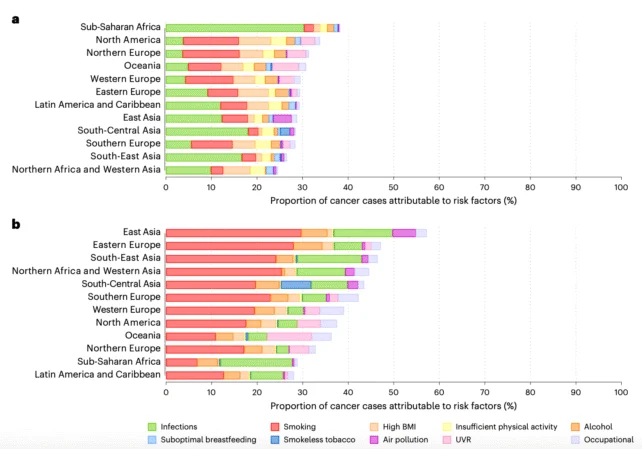
After smoking, alcohol consumption was the next most variable lifestyle factor. This accounted for 3.2 percent of all new cancer cases (approximately 700,000).
Researchers estimate that smoking and drinking account for nearly half (about 48%) of all preventable cancer cases.
Infectious diseases, on the other hand, were associated with about 10% of new cancer cases. In women, the largest proportion of preventable cancers was due to high-risk human papillomaviruses (HPV), which can cause cervical cancer.
Thankfully, HPV vaccines have now been developed that prevent many of these related diseases, but coverage remains low in many parts of the world.

Stomach cancer is more common in men and tends to be associated with smoking and infections caused by overcrowding, inadequate sanitation, and poor access to clean water.
“This is the first global analysis to show how much cancer risk is caused by causes that we can prevent,” says Andre Ilbawy, WHO’s cancer control team leader and co-author of the analysis.
“By examining patterns across countries and population groups, we can provide governments and individuals with more specific information to prevent many cancer cases before they occur.”
RELATED: U.S. cancer survival rate reaches groundbreaking high of 70%
Research shows there is much we can do to lower people’s risk of developing various types of cancer, so now is the time to do everything we can.
“In summary, nearly 4 in 10 global cancer cases in 2022 could have been prevented by eliminating exposure to the risk factors considered in this study,” the researchers explain in their paper.
“Ultimately, our findings reinforce the need for effective cancer prevention, which requires sustained political commitment and investment tailored to the specific risk profiles of people around the world.”
This research natural medicine.
A previous version of this article was published in February 2026.
#preventable #cancers #linked #lifestyle #habits