Sweden is far from self-sufficient in vegetable production, with very little domestic vegetable seed production. The sector is highly dependent on imported goods such as seeds, synthetic fertilizers, pesticides, and fuel.
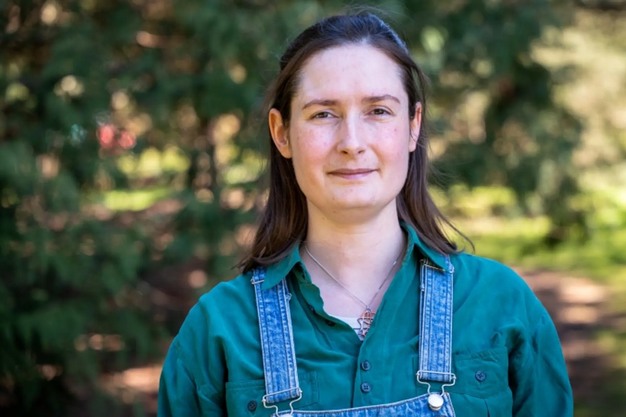
“This makes the food system vulnerable,” argues Linda Groot Nibelink, a doctoral student in SLU’s Department of Biosystems Engineering.
© Alba Martenson
“It’s important to think about what will happen if there is a crisis. How can we ensure that we can produce enough vegetables even if borders are closed?”
Explore the potential of NordGen’s heirloom varieties
In her research project, Linda Groot Nibelinck is exploring whether traditionally cultivated Scandinavian heirloom varieties grown before agriculture became industrialized could form part of the answer to that question.
These breeds are less dependent on external inputs than modern breeds called F1 hybrids. Some may be better able to withstand future climate change.
“Scandinavian heirloom varieties were developed here in the north, often in low-input conditions, and are adapted to the local climate and soils. This means they are suitable for growing under organic conditions. Plus, they are open-pollinated, so you can save and replant your own seeds, whereas with F1 hybrids you have to buy new seeds every year.”
This is not only because F1 hybrids are protected by intellectual property rights and it is illegal for farmers to propagate these seeds without permission.
“It’s even physically impossible. The next generation will be completely different and highly variable, losing the desired hybrid vigor of the F1 parent and resulting in weaker, less productive plants. Or, depending on how the F1 was created, the next generation won’t germinate at all.”
At her disposal for her heirloom vegetable research is NordGen’s gene bank in Arnap.
“They have a great collection of heirloom varieties, so it’s important to find out what’s out there and which of those varieties are suitable for commercial cultivation.”
grown on organic farming
Linda Groot Nibelink’s interest in plants and sustainability was formed during her childhood in a small village in the Netherlands. Her first job as a teenager was as a fruit and berry picker for a local biodynamic grower.
“There was so much diversity in the fruit they grew. They had chickens running around and they had their own pigs. That was my introduction to farming, and I thought that was the way it was everywhere,” she says.
At university, I completed a Bachelor’s degree in International Land and Water Management, followed by a Master’s degree in Organic Agriculture and Agroecology. She learned about the challenges of modern agriculture and its complex relationship with climate and the environment.
 ©Oscar Silen
“The sixth mass extinction we are currently experiencing is strongly linked to modern agriculture,” says Linda Groot Nibelink.
Through her work protesting against climate change, she ended up in Sweden, where she met her husband.
“Love and climate brought me here.”
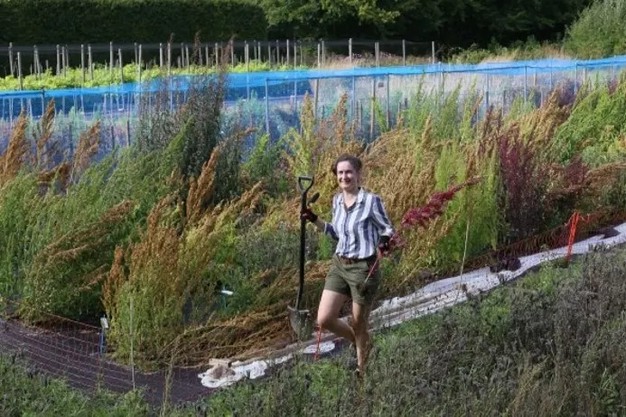
Orake and Swede in the garden during field trials
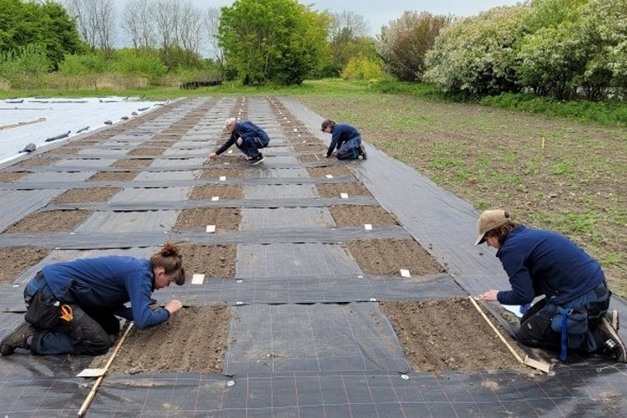
The research project combines field trials, laboratory experiments and interviews with vegetable growers across Sweden.
The first heirloom vegetable that Linda Groot Nibbeling experimented with was garden orake. It is a leafy vegetable that is considered a hardier predecessor to spinach.
“Garden orash is well adapted to dry conditions and can grow in saline soils, so it has the potential to cope with future climate change. Spinach tends to flower earlier in northern European regions due to longer days, but garden orash can be harvested over a much longer period.”
The next field trial is with the Swedes.
“It can be harvested in late fall and stored for up to six months, providing nutritional support all winter long. It’s also rich in vitamin C and folic acid, two essential nutrients.”
 © Linda Groot Nibelink
Diversity as both an asset and a challenge
During the trials, she enjoyed seeing the diversity of breeds in the field. At the same time, this is truly a challenge for native vegetables.
“One of the reasons we stopped using landrace varieties is that they are simply not compatible with modern farming systems.”
This change makes it difficult to use modern machinery. Compared to modern varieties, it has a different harvest time and may be more susceptible to disease. At the same time, native variety diversity can create resilience against disturbances that can wipe out entire fields of the same crop.
“There is nothing wrong with F1 hybrids in and of themselves. They are very stable and predictable, often have higher yields, and have many other good traits. This is great for farmers. But it also makes the farming system more dependent on external inputs, such as seeds. Combined with the loss of genetic diversity, it makes the whole system more vulnerable.”
Linda Groot Nibelinck hopes the project will reveal which Nordic heirlooms are suitable for commercial use. Some are suitable for hobby growers.
“I hope this project can contribute to increasing diversity in the field.”
Source: Swedish University of Agricultural Sciences
#Sweden #Nordic #heirloom #vegetables #important #times #crisis