
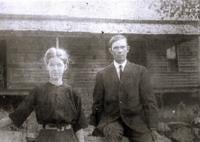
In the early days when families settled in the rural South, they produced many of the products they consumed, but they could not produce everything they needed. Long before cars and mass transit, general stores stocked the necessities of local rural families. Early settlers in North Fulton and other areas often created crossroads communities consisting of churches, schools, post offices, general stores, and more. In fact, they sometimes built a barn for their animals before building a house.
General stores were often built at community intersections. In some cases, buildings were built on farmers’ land and farmers ran shops to earn additional income. For example, James W. Shirley operated a store on a large farm where the Windward development in Alpharetta is now located. General stores were essential, especially in areas where the South’s infrastructure had been destroyed by the Civil War.
Stores were stocked with necessities such as flour, sugar, salt, coffee, cloth, sewing supplies, tools, nails, kerosene, patent medicines, ammunition, and in some cases gasoline and agricultural products. With limited cash, shopkeepers extended loans until the harvest season when farmers liquidated their accounts. Stores served as social gathering places and communication centers, where mail was received, newspapers were shared, and gossip was passed on.
Will and Nettie Wright lived in this house on the corner of Freemanville Road and Birmingham Road, on property they had purchased from Johnny Phillips around 1930. He built a beautiful stone home in 1935 using Stone Mountain stone with heart pine ceilings and diamond-shaped floors. All of these were designed by Will. This home has been thoroughly renovated by its current owners, Carol Cookery and her husband Robert Beal. Will Wright also owned a cotton gin and sawmill.
This column focuses on the general store located at Birmingham Crossroads, the current intersection of Freemanville Road and Birmingham Road in Milton. It was located at the edge of the property now owned by Carol Cookery and her husband Robert Beale. The store was built around 1935 by William (Will) T. Wright (1888-1952). It was made of wood and had an overhanging porch and a gas pump. Will and his wife Nettie J. Wright (1888-1967) operated the store until 1948, when Will asked Charles Walley (1928-2011) and his wife Mary Alice Wright Walley (1928-2014) to manage it. The Worley family was a young couple with a baby in tow. Mary was Will Wright’s cousin and Charles was a justice of the peace, someone who held court in the historic courthouse that still exists on the Cookery grounds. Mary was born and raised on Wright’s Mill Road near Free Home, an unincorporated community halfway between Canton and Cumming. Both parents are buried in Greenlawn Cemetery in Roswell. The Walley family ran the store until 1952, when it moved to Hembley Road. Charles worked for the Atlanta Paper Company, a family-owned business founded in 1868, and later for the Mead Corporation, which acquired the Atlanta Paper Company. Mary began working for the family-owned Roswell Seating Company, which was founded in 1927. Roswell Seating Company manufactured office furniture and furniture for auditoriums and churches. It closed around 2015.
Thank you to Tim Worley, son of Charles and Mary Worley. He is one of the few survivors who knows about the store, as he and his brothers, John and Phil, were born when their parents owned it or after they moved away.
Tim tells a story his mother told him about Jadar Cagle, who lived across the street from Birmingham Road. Every morning, Tim’s parents listened to Jader’s hens sing the “egg song” as they laid eggs.
“Jader ran across the street and gave the eggs to his parents in exchange for an egg’s worth of kit candy,” Tim says.
Charles and Mary lived in a small apartment behind the store. Tim tells a story about one night when someone banged on his apartment door over and over again.
“Dad asked the man three times to identify himself, but he kept banging and pushing the door,” Tim recalled.
The father was about to shoot through the door when he realized the voice was his drunk neighbor.
“My father got so upset that he gave up his gun and didn’t use it for years,” Tim said.
Windward resident Nina Samples is the great-granddaughter of Will Wright. She remembers her mother, Joyce Walker Samples, often talking about the store when she was a child. Nina recalls hearing that Charles and Mary were very kind and gentle people and were highly respected.
“I’m sure our customers loved it. Mary always had a smile on her face every time we met,” Nina says.
Special thanks to Bill Lusk for introducing me to Tim Worley.
#Opinion #general #stores #important #early #South