
The start time for the Miami Grand Prix was brought forward by three hours to avoid heavy rain, particularly thunderstorms, as per local regulations in Florida, but tire supplier Pirelli actually wanted a wet race in the Sunshine State.
With both ambient and track temperatures high in Miami, drivers would have found it slightly easier to fit intermediate or full wet into an acceptable operating window. But in Montreal, the situation is even more complicated, as the temperature and circuit layout are completely different.
Asked by Motorsport.com how much disruption there could be if Montreal is expected to be the first wet race for 2026 cars, Pirelli’s Simone Vera said with a laugh:
“It’s a low-temperature, low-energy circuit. If it rains here, the situation will be complicated because the weather forecast says it’s going to be 11 or 12 degrees. And if it rains, the course will be about the same.”
In such situations, it becomes particularly difficult for drivers to increase the temperature of Pirelli tires, especially intermediate tires. On Saturday, several drivers, including pole sitter George Russell, had already been told over the radio that their front tires were too cold on slicks with track temperatures of 30 to 40 degrees Celsius.
On a wet Sunday, the challenge will be considerably greater, Berra admitted: “We’ve never had conditions like this and we’ve never designed tires for conditions like this because it’s so cold. It can be difficult. It’s going to be trickier in intermediates, but a little less tricky in full wet. That compound has a narrow operating range, so in full wet it will struggle a bit more.”
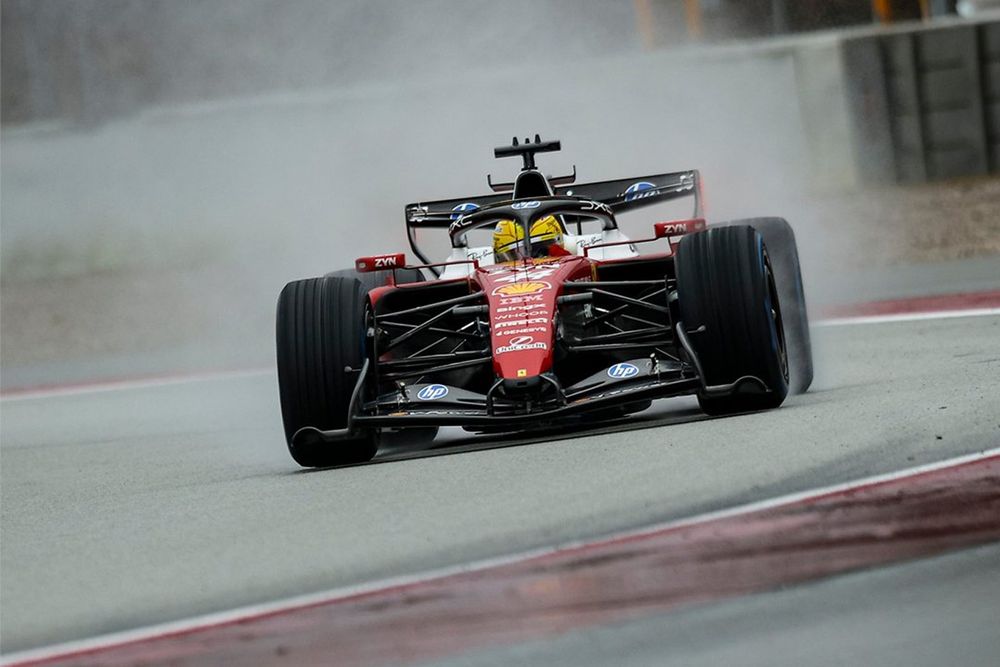
lewis hamilton, ferrari
Photo courtesy of Ferrari
That would be an unusual scenario. In recent years, full wets have become the least popular tire among F1 drivers, who generally wanted to switch to intermediates as soon as possible. But in Canada, Pirelli expects the opposite.
“So for once in the last few years, wets can be faster than intermediates,” Vera said.
To help drivers increase tire temperatures, the FIA and Pirelli increased the temperature of the intermediate cars’ tire blankets to 70 degrees Celsius, similar to what they did in Miami. Tire blankets for full wet conditions are specified at 40 degrees.
This should help during the warm-up phase, but Berra stressed that maintaining tire temperatures could prove equally difficult in Montreal.
“It takes five laps to stabilize and that’s enough. We just have to wait for the right time,” he said.
“But the important thing is, if your body temperature starts to drop and you can’t find a way to generate body heat or recover body temperature, you’re going to have a problem because you’re going to start struggling and you’re going to lose your grip. So you basically can’t run.” [the intermediates] At this low temperature. ”
According to Pirelli, this problem cannot be resolved, at least in the short term. Increasing the blanket temperature further may help during the opening laps, but will not prevent the driver from gradually decreasing body temperature afterwards.
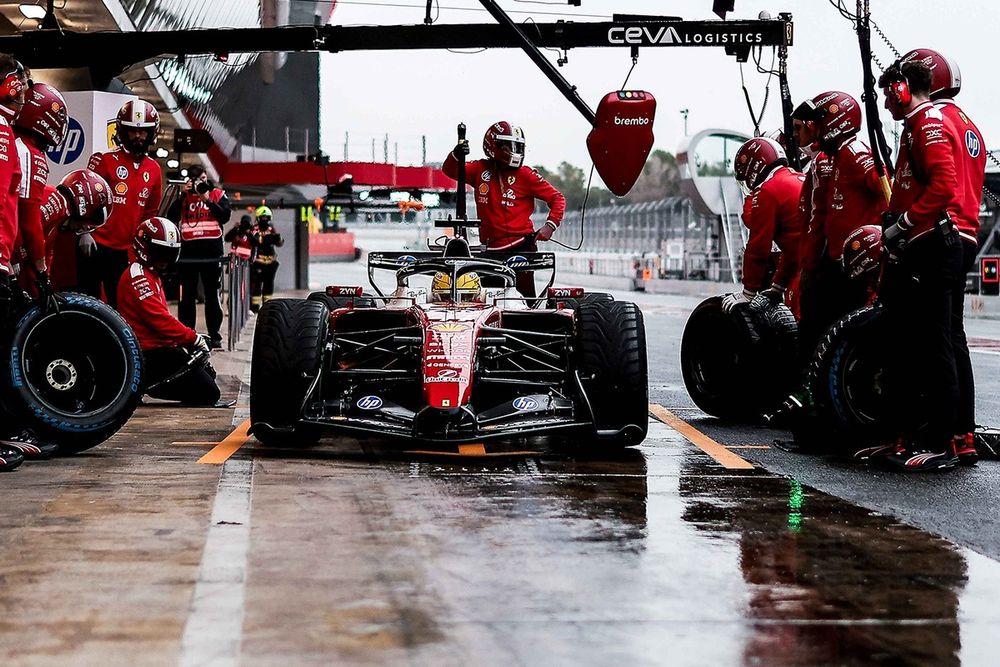
lewis hamilton, ferrari
Photo courtesy of Ferrari
“You can raise the temperature of the blanket to 140 degrees, but then it will drop to 50 degrees. Depending on how much you raise the temperature, you’ll get additional gains for the first, second, or third lap, but you’ll end up with a very similar situation.”
This is exactly the situation that some drivers consider potentially dangerous. Max Verstappen was also among those who spoke on Saturday. The Dutchman normally welcomes wet conditions, but admitted he was not looking forward to a cold and wet race in Montreal.
“When your tires are too cold, it’s like driving on ice,” he said. “Full wet works a little better, but that was during testing in Barcelona, where it naturally heats up a bit more through the corners. I think it’s difficult here.”
The reason for this is the layout of Circuit Gilles Villeneuve, with long straights that keep the tires cold and relatively few corners that raise the temperature of the tires.
“I just hope the weather isn’t too bad,” Verstappen added. “If the tires don’t perform properly, there’s a lot of disruption. I think things are already difficult enough.”
Piastri: Even engineers don’t know how a power unit works.
Beyond tire concerns, the Canadian Grand Prix could be the first real look at the 2026 car in wet conditions, although it’s worth noting that Verstappen, Charles Leclerc and Pierre Gasly are among the drivers who have already completed a wet test day.
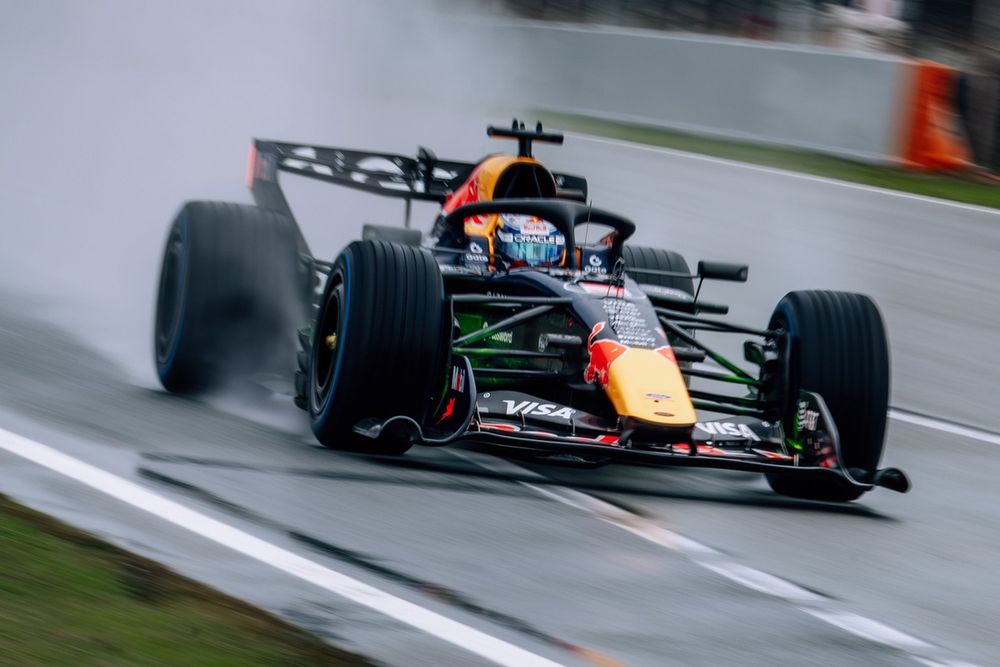
Max Verstappen, Red Bull Racing
Photo credit: Formula 1
The new generation of cars, and in particular the power units, have also raised concerns among drivers, including Oscar Piastri, who said: “These power units don’t like unstable stability and it’s basically impossible to be consistent in the rain. We’ll probably have some problems up and down the grid, but let’s see what we get.”
For F1 teams, this will be a step into the unknown, as preparatory work and simulation models have not provided a clear answer.
“We did a lot of preparation in Miami and tried to figure things out. I think the bottom line was, we don’t know what’s going to happen. And it’s an interesting place to be, with hundreds and thousands of the best engineers out there who don’t know what’s going to happen,” Piastri continued.
To improve safety, the FIA has once again issued a rain hazard declaration, similar to what it did in Miami. This means teams will be allowed to change ride height, boost mode will be disabled, MGU-K deployment will be reduced from 350 kilowatts to 250 kilowatts, and active aerodynamics in straight-line mode will only be active at the front of the car.
Still, drivers are still unsure whether these measures will allow 2026 vehicles to operate properly in wet weather.
“These cars are not what they should be in the rain,” Verstappen said. “There’s already less downforce and hybrid engines are harder to handle than V8 engines. Especially with the current engine formula, they’re less responsive in the wet. So, for sure, it’s going to be a lot more difficult.”
It was always going to be difficult to get a first taste of the 2026 car in wet conditions, but it becomes even more difficult when it happens in the cold temperatures and unique layout of Circuit Gilles Villeneuve.
I want your opinion!
What would you like to see on Motorsport.com?
Please take our 5 minute survey.
– Motorsport.com Team
#rainy #Canadian #Grand #Prix #perfect #storm