TUntil Arsene Wenger was appointed manager of Arsenal FC in 1996, there were few notable African players in the English Premier League and in English football. The few notable exceptions were Leeds United’s Tony Yeboah and Lucas Radebe, and Everton’s Daniel Amokachi.
By the time Arsenal sacked Arsene Wenger in 2018, he and the club had won the honor of being primarily responsible for mainstreaming African footballers in England’s top flight. At one point in the mid-to-late 2000s, at least seven of Arsenal’s 11 starters on any given matchday were black, either children of African immigrants to Europe, players of African descent from the Caribbean, or even players born in African countries. By 2025, more than 20 African-born players were playing for Arsenal, largely due to Wenger’s achievements.
At least three African players, Laurent, Kolo Toure and Nwankwo Kanu, were regular starters on Arsenal’s legendary Invincibles team, which went unbeaten every season in 2003-2004. It is also an amazing coincidence that the last major player that Wenger signed with Arsenal was Pierre-Emerick Aubameyang, an African and Gabonese player.
In this way, Arsenal began a revolution regarding race in British and global football culture. On the field, Arsenal were represented by these players and their successors, who came to represent London’s diversity, particularly its African diaspora. Arsenal legend Thierry Henry (whose parents were immigrants from the French Caribbean, his mother from Martinique and his father from Guadeloupe) commented on his retirement from the club that Arsenal had become “a club of people and cities” by being one of the first clubs to put black players at the heart of their team. All of this has combined to cement Arsenal’s place in African football lore, making it one of the continent’s most supported football clubs, especially among football fans who came of age in the 21st century.
Like other top English professional clubs, Arsenal have historically only recruited white players of African origin. The first was Dan le Roux, a descendant of white settlers from South Africa. His career at Arsenal was unremarkable from 1957 to 1958, making just seven appearances. The first black player to play for Arsenal was Brendon Batson, who was born in Grenada and immigrated to Britain from Trinidad. Batson played 10 games for the club between 1971 and 1974 before moving to West Bromwich Albion FC, where, along with Cyril Regis and Rory Cunningham, he was part of perhaps the most iconic trio of black players at English top-flight clubs in the 1970s. Batson’s signing also paved the way for a small number of black players, also of Caribbean parents, to join Arsenal for the first time, and the team that won the Gunners their first title in 18 years in 1989 featured the unforgettable trio of Michael Thomas, Paul Davies and David Rocastle.
When the Premier League was created in 1992, Coventry City FC selected an African footballer in their starting XI for the first time that season. It was Peter Ndlovu from Zimbabwe.
Manager Wenger was in charge of signing Arsenal’s first player from the African continent, Liberian-born Christopher Reh. One of Leh’s special features is that he is one of only two players (the other being Thierry Henry) to be signed by Wenger, who was at both AS Monaco FC and Arsenal. But perhaps the more important detail of Leh’s biography and Wenger’s time at AS Monaco is that he is a cousin of future Liberian president George Weah, who won the Ballon d’Or in 1995 as a footballer and is the first and currently only player to win the Ballon d’Or representing an African country. Wenger’s relationship and success with George Weah at Monaco also explains his subsequent affinity for African players. (It is worth mentioning that when Weah won the Ballon d’Or, he called Wenger out on stage and handed him the trophy in his stead. Later, when Weah became president, he invited Wenger on an official visit and awarded him Liberia’s highest honor, Commander-in-Chief of the Humanitarian Order for the Relief of Africa.)
Christopher Rea had a decent career at Arsenal, spending four years at the club and a further three on loan. He helped Arsenal win the FA Cup (he scored the winning goal in the semi-final) and Premier League in 1998. But it was Kanu whose arrival in 1999 forever changed the perception of African players in England. He has previously won the UEFA Champions League with AFC Ajax and the Olympic Games with Nigeria. A proven winner and a tall player who could score goals from seemingly impossible angles, Kanu was, in Wenger’s words, “genius, creative, technical, courageous and a player admired by all.” He quickly became a cult hero at the club.
In 2000, Kanu was followed by Laurent, the son of Equatorial Guinean exiles who settled in Cameroon (Lauren later played in the World Cup) and began his football career in Spain. Kolo Toure joined Arsenal from the Ivorian youth set-up in 2002 after a short trial. In his book about his time at Arsenal, Wenger named Toure, along with Sol Campbell, as being “fundamentally important” to the Invincibles’ success. Toure was bought cheaply (just £150,000) and, in Wenger’s words, “has become one of the best central defenders in the game”.
Next came Emmanuel Eboue, who also started his career at the same Ivorian academy as Eboue. (Kolo’s younger brother Yaya Toure went on trial at Arsenal in 2003, but Wenger decided not to sign him.)
These players, along with recruits from countries such as France and the Netherlands (at one point controversially, Wenger did not use any British-born players), would form the core of Arsenal’s success in the first decade of the 21st century.
In the early 2010s, as the original group aged and moved on, Wenger made another breakthrough with new players and another group of African players, including Alex Song, Alex Iwobi, Emmanuel Adebayor and Gervinho. Both Song and Iwobi are part of the African football family heritage of Rigoberto Song and Jay-Jay Okocha respectively. But success became increasingly difficult for Wenger’s second generation of coaches. These teams won the FA Cup multiple times and qualified for the Champions League every season, but never won the Premier League again.
By 2013, Arsenal fans began calling for Wenger’s sacking as manager. Wenger’s eventual retirement also ended Arsenal’s dependence on African players. But Wenger’s successors will continue this legacy by signing children of African immigrants from London, such as Eddie Nketiah and Bukayo Saka.
Wenger also signed a number of North African players and players of North African descent, most notably Egypt’s Mohamed Elneny, Morocco’s Marouane Chamakh and France’s Samir Nasri. And from Latin America, we have players like Joel Campbell (Costa Rica) and Brazilians Gilberto Silva and Julio Baptista.
When Wenger signed players like Kanu, Laurent, Toure and Eboue, English football was still distrustful of foreigners, especially players and coaches from outside Europe. African fans watching on satellite TV realized they were in Wenger’s Arsenal (he was one of the first foreign managers in the Premier League). Their accents, hairstyles, fashion, and fun football (although they could play in a physical style if necessary) were in stark contrast to the tactics of their opponents from other clubs. Wenger also seemed unfazed by the fact that African players fly for a month every two years to compete in the African Cup of Nations, further endearing him to African fans who felt disrespected by Europe’s top leagues, clubs and football managers by denying their sons the chance to represent their country.
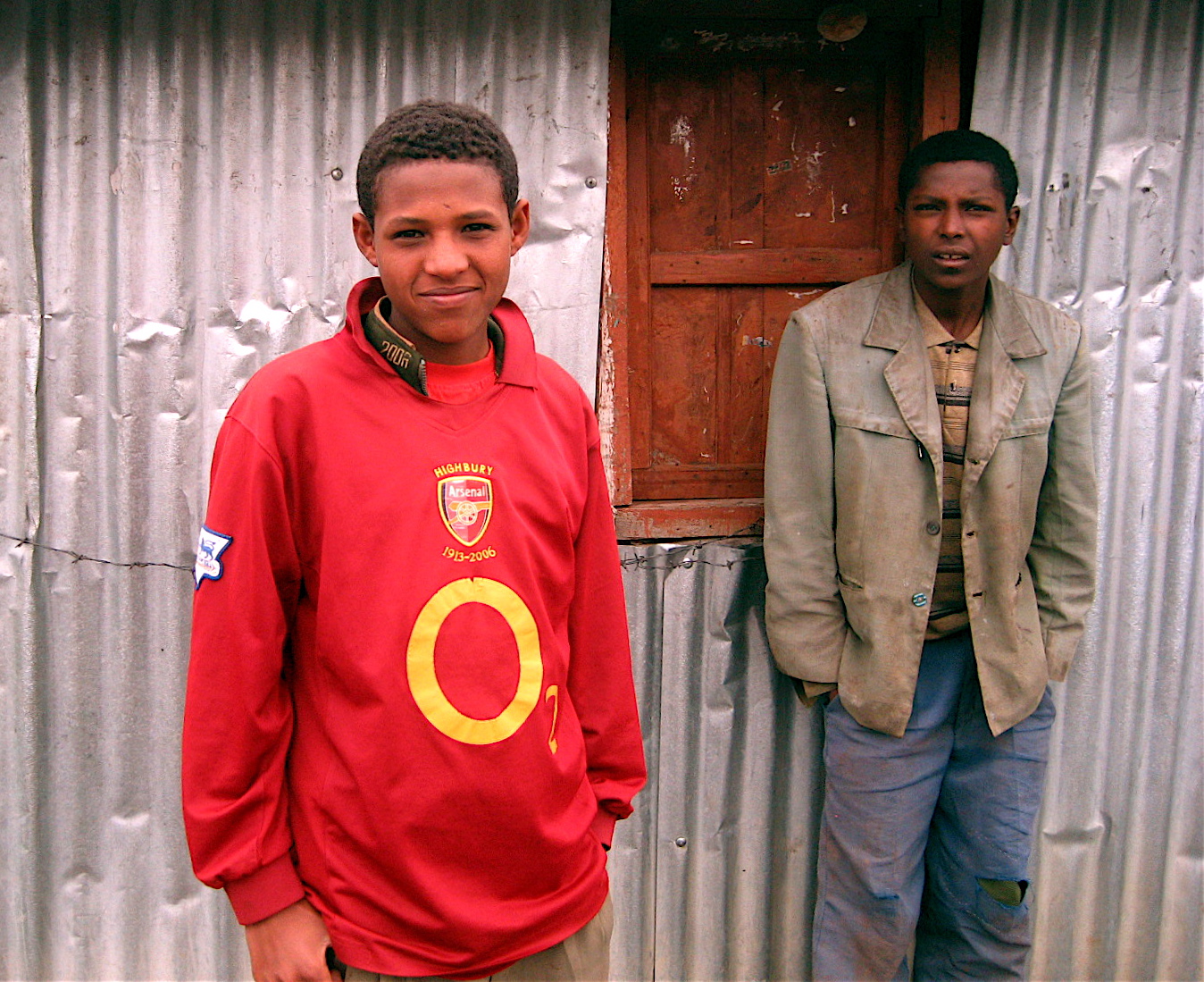
Today, Arsenal’s African heritage is felt more off the field than on it. Of all the popular fan TV channels on social media for English Premier League teams, the channel aimed at Arsenal fans is the most diverse. On YouTube, Kelechi, a Nigerian immigrant scientist and Arsenal fan, is now as well known as Saka. Kelechi autotunes Afropop songs to explain his mood before giving match analysis on AFTV and, increasingly, on his own social media channels. This channel and its derivatives further contributed to mainstreaming African participation in the World Cup and African Cup of Nations among young European American football supporters. All of this has reinforced the view that Arsenal is open, welcoming, diverse and, above all, representative of democracy, anti-racism and progressive values that are lacking on the continent.
There is therefore a harsh irony in the fact that the same club spent years (2018-2025) promoting one of Africa’s most effective dictatorships through its sponsorship of ‘Visit Rwanda’. Arsenal’s sleeve sponsorship deal with Rwanda has come to an end, but the controversy surrounding the partnership has left open questions about the contradictory relationship between global football branding, authoritarian image-making and the political aspirations of a new generation of African supporters who are finding affinity and identity with the club.
#Arsenal #African #club